
UK and Australia Ink Landmark Geelong Treaty to Build Nuclear Submarines — But US Support Wavers
In a bold step toward reshaping Indo-Pacific security and deepening bilateral defence ties, the United Kingdom and Australia have signed a 50-year treaty to design, build, and operate a new class of nuclear-powered submarines — even as US commitment to the wider AUKUS pact faces scrutiny under the Trump administration’s “America First” lens.
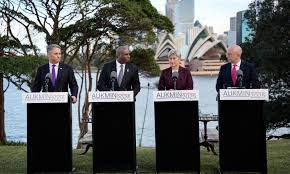
Dubbed the “Geelong Treaty,” the agreement was signed Saturday in the Australian city of Geelong by UK Defence Secretary John Healey and Australian Defence Minister Richard Marles. The deal marks a defining chapter in the AUKUS partnership, which initially brought together Australia, the UK, and the US in 2021 to counter growing security concerns in the Indo-Pacific.
What the Geelong Treaty Covers
The treaty cements a generational commitment to the SSN-AUKUS submarine program — a next-gen nuclear-powered vessel incorporating technology from all three AUKUS nations. The agreement is focused on:
-
Design, build, and operation of SSN-AUKUS submarines
-
Sustainment and disposal of nuclear assets
-
Workforce training and development
-
Infrastructure and regulatory alignment between the UK and Australia
“This is one of the most significant treaties between our two nations,” said Marles, hailing it as a step toward building a “seamless defence industrial base”.
British submarines will be built in northern England, while Australia plans to construct its fleet in Adelaide, with submarines slated for delivery in the 2040s.
AUKUS Without America?
Trump’s Review Casts Uncertainty Over US Role
Notably absent from the treaty signing was the United States, which remains a vital player in the trilateral AUKUS pact but is now reevaluating its role. The Trump administration has launched a comprehensive review of its AUKUS involvement, questioning whether the pact aligns with Trump’s “America First” defence agenda.
At the center of the review is Elbridge Colby, the Pentagon’s undersecretary for defence policy, who has expressed doubts about the initiative. Colby argues that AUKUS risks overextending US resources and leaving American forces “underresourced and exposed.”
Despite the tension, UK Foreign Secretary David Lammy, speaking at the Lowy Institute in Sydney, downplayed the American review.
“All governments do reviews,” Lammy said. “This is normal — especially when the stakes involve billions in procurement and multi-decade strategic realignment.”
He insisted that the deal with Australia was not a rescue operation for a wavering US, but a robust partnership that secures 20,000 jobs across both nations.
What’s in It for Australia and the UK?
Economic, Industrial and Strategic Upsides
The Geelong Treaty has both nations investing deeply in one another’s defence industrial bases:
-
Australia will pay approximately $4.6 billion to support Britain’s nuclear reactor development.
-
A similar amount will go to the US shipbuilding industry under existing AUKUS commitments.
-
Australian companies will supply components to British shipyards, while UK firms will contribute to construction in Adelaide.
“This is not just about submarines. It’s about building jobs, building trust, and building the next 50 years of our defence capabilities,” said Marles.
Healey echoed the sentiment, declaring the deal would “fortify the Indo-Pacific” and “strengthen NATO” through Anglo-Australian collaboration.
Strategic Significance: Indo-Pacific and Beyond
A Signal to China and Other Regional Powers
Beyond industrial benefits, the Geelong Treaty sends a geopolitical message.
Lammy emphasized that the world is entering a “new era of instability,” and that robust defence partnerships serve as a deterrent to adversaries.
“Investing in defence is an investment in peace,” he said, “because opponents realise you are armed and capable.”
While not explicitly naming China, the subtext is clear. With tensions rising over Taiwan, South China Sea incursions, and regional military buildups, AUKUS is viewed as a direct counterweight to Beijing’s growing assertiveness.
Is the US the Weak Link?
AUKUS Without Full American Backing?
Despite the UK and Australia moving full steam ahead, the absence of US participation in the Geelong Treaty introduces strategic ambiguity.
The US had committed to selling Australia three Virginia-class nuclear submarines starting in the 2030s as part of the $368 billion broader AUKUS framework. If Trump’s review stalls or scales back that support, Australia’s submarine capability could suffer serious delays — or become reliant on the UK alone.
Colby’s concerns reflect a growing debate in Washington: Should the US prioritize allies’ defence growth, or concentrate solely on shoring up its own naval presence?
So far, no official timeline has been given for the completion of the US review, but the uncertainty is palpable.
What Comes Next?
Parliamentary Review and Industry Acceleration
The Geelong Treaty will be tabled in Australia’s Parliament next week, after which the full text is expected to be released. In parallel, both countries are accelerating investment in naval infrastructure:
-
Expansion of Osborne Naval Shipyard in South Australia
-
Increased training slots in the UK for Australian submariners
-
Regulatory harmonization for nuclear propulsion systems
If ratified as expected, the treaty will form the backbone of AUKUS implementation for decades — regardless of American hesitancy.
AUKUS Moves Ahead, With or Without Trump
While Trump’s review may signal turbulence, the UK and Australia are making it clear: AUKUS is not just an American-led project anymore.
The Geelong Treaty sets a precedent — one where strategic autonomy, industrial interdependence, and Indo-Pacific security are prioritized, even if Washington wavers.
As the global balance shifts, this bold move positions the UK and Australia as defence co-architects of a post-US-led Pacific — with or without America in the captain’s seat.