
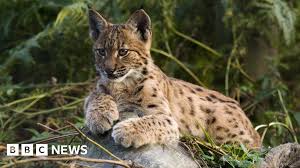
The Return of the Predator: Northumberland Set to Reintroduce Lynx After 1,300-Year Absence
A new study has revealed that releasing just 20 Eurasian lynx into Northumberland’s Kielder Forest could lead to a thriving wild population—and most locals are on board. The bold rewilding vision, backed by science and community support, could mark the UK’s most ambitious predator reintroduction project since the return of beavers.
Published in the Journal of Environmental Management, the research concludes that the Kielder Forest region is the only place in England or Wales with enough continuous woodland to sustain these elusive big cats.
With 72% of local residents in support and a growing push from conservation leaders, the comeback of Britain’s missing wild cat seems not only possible—but probable.
Why Lynx, and Why Now?
A Species Lost, A Landscape Changed
The Eurasian lynx once roamed the dense woodlands of the British Isles. But around 1,300 years ago, it vanished—driven to extinction by human hunting and large-scale habitat destruction.
Today, with conservation momentum growing and woodland restoration underway, the conditions for its return have changed. According to Northumberland Wildlife Trust, bringing back lynx could:
-
Help restore ecological balance by keeping deer populations in check
-
Reduce the damage deer cause by stripping bark from trees
-
Boost eco-tourism in one of the UK’s most scenic but under-visited regions
Dr. Rob Stoneman, director of landscape recovery at the Wildlife Trusts, sums it up:
“Bringing back lynx could benefit wildlife more widely. We’ve pushed many native species to extinction—it’s time to bring some of them back.”
The Reintroduction Plan: Science, Strategy, and Scale
The Numbers: From 20 to 50
The study’s modelling suggests that releasing 20 lynx over a span of several years could create a self-sustaining population of about 50 individuals. These animals would roam:
-
Northwest Northumberland
-
Edge of Cumbria
-
Bordering regions of southern Scotland
The target habitat, Kielder Forest, is one of the UK’s largest woodland areas—providing ideal conditions for these shy, forest-dwelling predators, which are slightly smaller than a Labrador but require vast, undisturbed territories.
Public Backing: Community Engagement at Its Core
A year-long consultation run by the Missing Lynx Project, led by the Wildlife Trusts, found overwhelming public support, with nearly three-quarters of residents approving the reintroduction.
But consultation didn’t stop at surveys.
The project actively engaged local farmers, many of whom initially feared that lynx would target sheep. In response, the team organized educational trips to Europe, where farmers have lived alongside lynx for decades.
Farmers Speak Out: “It Can Work Here Too”
European Proof of Concept
One of the voices that’s helped shift opinion is Lauren Harrison, a sheep farmer from near Hadrian’s Wall. Initially skeptical, her experience abroad reshaped her thinking.
“I saw in Europe that it’s possible to live alongside lynx. The risks to livestock can be minimal and there are so many positives. Tourism is an obvious one, but a more balanced ecosystem is beneficial to farmers too.”
She praised the Missing Lynx Project’s collaborative approach, adding:
“They’ve really listened and want to keep working with us. I’d urge other farmers to engage and take ownership of the project.”
Risk vs. Reward: Addressing Common Concerns
Livestock Safety
Though lynx primarily prey on roe deer and small mammals, some farmers remain cautious about the potential for livestock predation. However, European data suggests that well-managed coexistence is achievable, especially with deterrent measures and compensation frameworks in place.
Tourism Boost
Regions in Europe that have reintroduced lynx report measurable increases in eco-tourism revenue, driven by wildlife watchers and conservation tourism. For rural Northumberland, this could mean:
-
Increased overnight stays
-
More guided wildlife tours
-
Local economic benefits for small businesses
Government Approval: The Final Hurdle
While the science is sound and public sentiment favorable, UK ministers must still greenlight any reintroduction.
The Wildlife Trusts—who were instrumental in bringing beavers back to England legally for the first time this year—are now campaigning for the government to give lynx the same chance.
Bigger Picture: A New Era of British Rewilding?
From Beavers to Bison to Big Cats
The UK has recently begun embracing rewilding as a national strategy, with landmark projects bringing back:
-
Beavers, now legally protected
-
Bison, released in Kent to regenerate woodlands naturally
-
And now possibly, lynx—apex predators that could restore balance at the top of the food chain
For a country that has historically lost more native species than most in Europe, this could signal a radical shift in environmental philosophy.
From Extinction to Opportunity
Britain’s wild places have long been silent of apex predators. But if the Missing Lynx Project succeeds, the ghost of an ancient predator may finally return—not as a threat, but as a sign that nature is healing.
Reintroducing the lynx is more than a conservation milestone. It’s a statement of intent—a belief that coexistence is possible, balance is necessary, and our landscapes deserve their wildness back.