
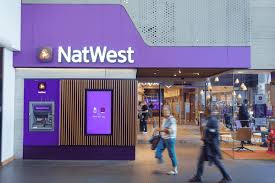
Profits Climb, Buybacks Resume, But CEO Warns of Looming Tax Headwinds
NatWest Group is rewarding shareholders with a fresh £1.5 billion just weeks after the UK government offloaded its final stake in the once state-owned bank. The windfall follows a stronger-than-expected Q2 performance, powered by rising interest income and the strategic boost from its acquisition of Sainsbury’s banking arm.
The high street lender, formerly Royal Bank of Scotland, is now enjoying its first fully privatised quarter in 17 years, and it’s making a statement — through a 9.5p interim dividend and a new £750 million share buyback program.
Yet even as NatWest celebrates a major corporate milestone, CEO Paul Thwaite is sounding the alarm about the growing possibility of fresh taxes on the banking sector under Chancellor Rachel Reeves.
A Landmark Moment: First Quarter as a Fully Privatised Bank
End of an Era for a Post-Crisis Giant
NatWest’s announcement caps off a dramatic turnaround that started with a £45 billion government bailout during the 2008 financial crisis. The bank has now come full circle, shedding its final government-owned shares in May 2025. That exit — executed over 17 years through a staggered sell-off — marks a defining moment in UK banking history.
But for UK taxpayers, the final chapter came with a cost: a £10 billion loss. Government shares were sold below the average bailout price of 502p, although NatWest shares edged slightly above that level — up 1% to 506p — following Friday’s results.
Shareholder Bonanza: £768M Dividend + £750M Buyback
Breakdown of the £1.5 Billion Return
NatWest announced:
-
An interim dividend of 9.5p per share, equating to £768 million
-
A new £750 million share buyback to be executed in the second half of 2025
This massive capital return signals the bank’s renewed confidence in its balance sheet, risk profile, and future earnings trajectory.
A Nod to New Investors
Thwaite noted that the rapid sell-down of government shares over the past 18 months helped attract new investors focused on growth and capital discipline.
“This was clearly an important milestone, and the accelerated sell-down of government shares over the past 18 months allowed us to attract new investors who share our focus on driving growth across the business,” said Thwaite.
Strong Q2 Earnings: Profits Beat Forecasts, Guidance Raised
Q2 Net Profit Hits £1.8 Billion
The bank posted £1.8 billion in Q2 profits, a 4.4% increase over the same period last year — beating market expectations. Higher net interest income, partly bolstered by the integration of Sainsbury’s banking unit, contributed to the upside surprise.
2025 Outlook Upgraded
NatWest upgraded its 2025 income guidance (excluding one-offs) to over £16 billion, compared to the previous range of £15.2 billion–£15.7 billion. The upward revision points to confidence in ongoing consumer lending, commercial banking stability, and cost containment.
Strategic Wins: Sainsbury’s Banking Deal Begins to Pay Off
The Sainsbury’s Bank acquisition, finalized in 2024, is already bearing fruit. By absorbing the grocery retailer’s financial services arm, NatWest has added scale and diversified its income streams.
The deal is expected to continue contributing to top-line growth through cross-selling opportunities, better customer data insights, and operational synergies across the group.
The Tax Warning: Will Reeves Target Big Banks?
CEO Paul Thwaite’s Clear Message to Government
Amid speculation that Chancellor Rachel Reeves may announce new bank taxes in her autumn budget, Thwaite offered a pointed caution.
“What’s very important, from an investor perspective, is that they have consistency, stability and predictability,” he told reporters. “Policymakers must be thoughtful about the signals they send in respect of policy.”
The concern: higher levies could derail capital planning, reduce profitability, and deter global investors at a time when the UK is positioning itself as a post-Brexit growth hub.
Banking Sector Braces for Autumn Budget
If Reeves imposes further levies — beyond the existing bank surcharge and corporation tax — it could force major players like NatWest, Lloyds, and HSBC to revise shareholder return strategies or curb credit expansion.
Coutts and the Non-Dom Exit: No Alarms Yet
Ultra-Wealthy Clientele Monitoring Tax Reforms
When asked about the impact of the abolished non-dom regime on NatWest’s luxury banking subsidiary, Coutts, Thwaite said there had been no meaningful customer exits so far, but noted the segment is highly sensitive to policy shifts.
“That customer base is very alive to policy change, be that tax or regulatory,” he said. “We’re monitoring it very closely, but [see] no meaningful change at this stage.”
Coutts, which serves ultra-high-net-worth individuals, could be vulnerable to further flight of wealth if tax pressures intensify on foreign asset holders.
Key Takeaways for Investors and Analysts
-
Capital Return: £1.5 billion in combined dividend and buyback sends strong shareholder confidence signal.
-
Profitability: Earnings momentum remains solid with Q2 beat and 2025 outlook upgrade.
-
Tax Watch: CEO’s tax caution hints at board-level anxiety over potential fiscal tightening.
-
Privatisation Complete: First fully private quarter in 17 years opens new chapter in NatWest’s growth story.
-
No Coutts Exodus — Yet: Wealth arm stable, but non-dom fallout being monitored closely.
What This Means for the UK Banking Sector
NatWest’s earnings and capital actions reflect broader strength across UK lenders, including rivals like Lloyds, which recently reported a 17% profit surge. However, looming political uncertainties — especially regarding tax policy — could become a major headwind.
With the Autumn Statement approaching, the banking industry will be lobbying hard to avoid punitive levies that could restrict capital flows, curtail lending, and disrupt dividend plans.
For now, NatWest stands as a resurgent post-bailout success story — profitable, privatised, and distributing capital. But its future hinges not just on customers and markets, but on Downing Street’s next fiscal move.